Beyond the Build: What Scaling Industrial Technology Teaches You About Supply Chains
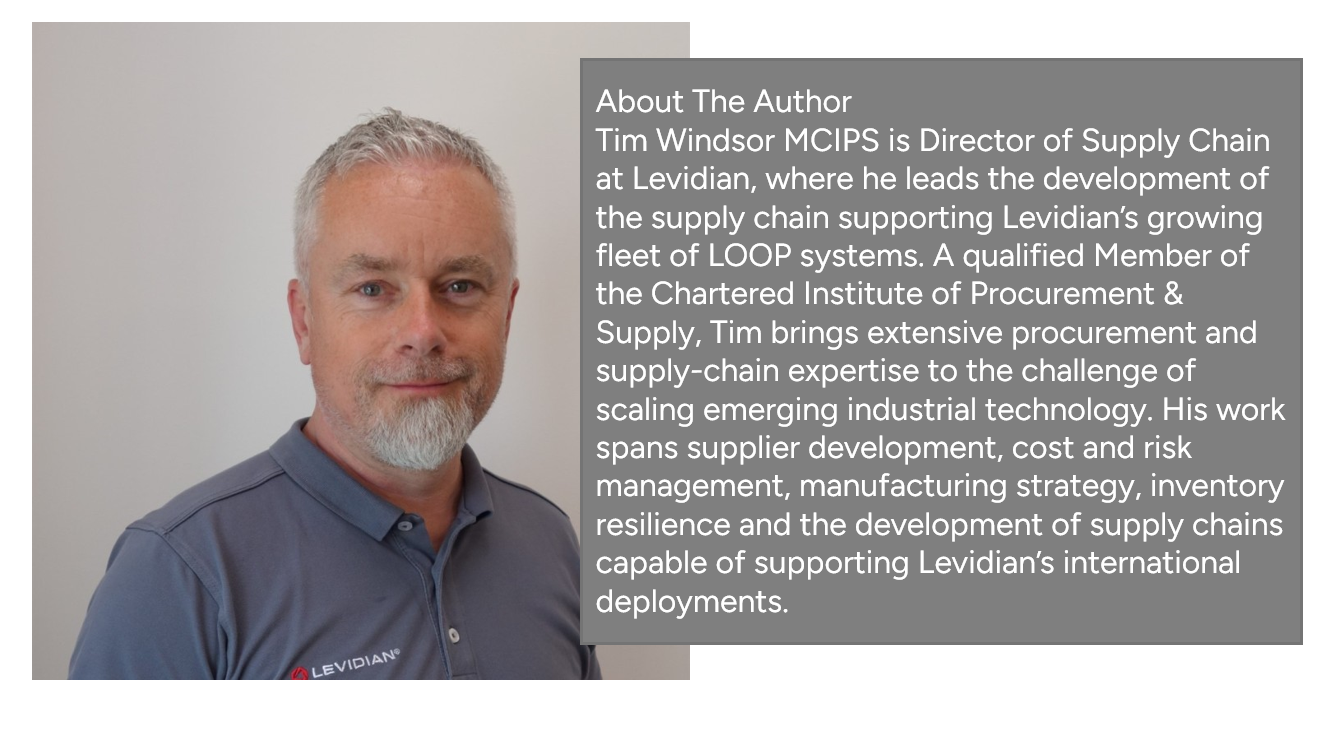
By Tim Windsor, Director of Supply Chain, Levidian
When you're developing a new industrial technology, it's easy to focus on the engineering, getting the design right, proving the process, and ensuring the equipment performs as intended.
But there's another challenge running alongside all of that. How do you build a supply chain around a technology that is still evolving, and then develop it into something that can support equipment operating thousands of miles from where it was originally built?
It's a very different proposition from managing the supply chain for an established manufacturer.
In a mature business, you generally have defined products, established bills of materials, predictable demand and years of supplier and component performance data. In a scaling technology business, many of those things are still being developed.
Designs change, requirements evolve, and demand can be difficult to forecast. Suppliers are learning alongside you, and the decisions you make today can have consequences for equipment that will be operating for years.
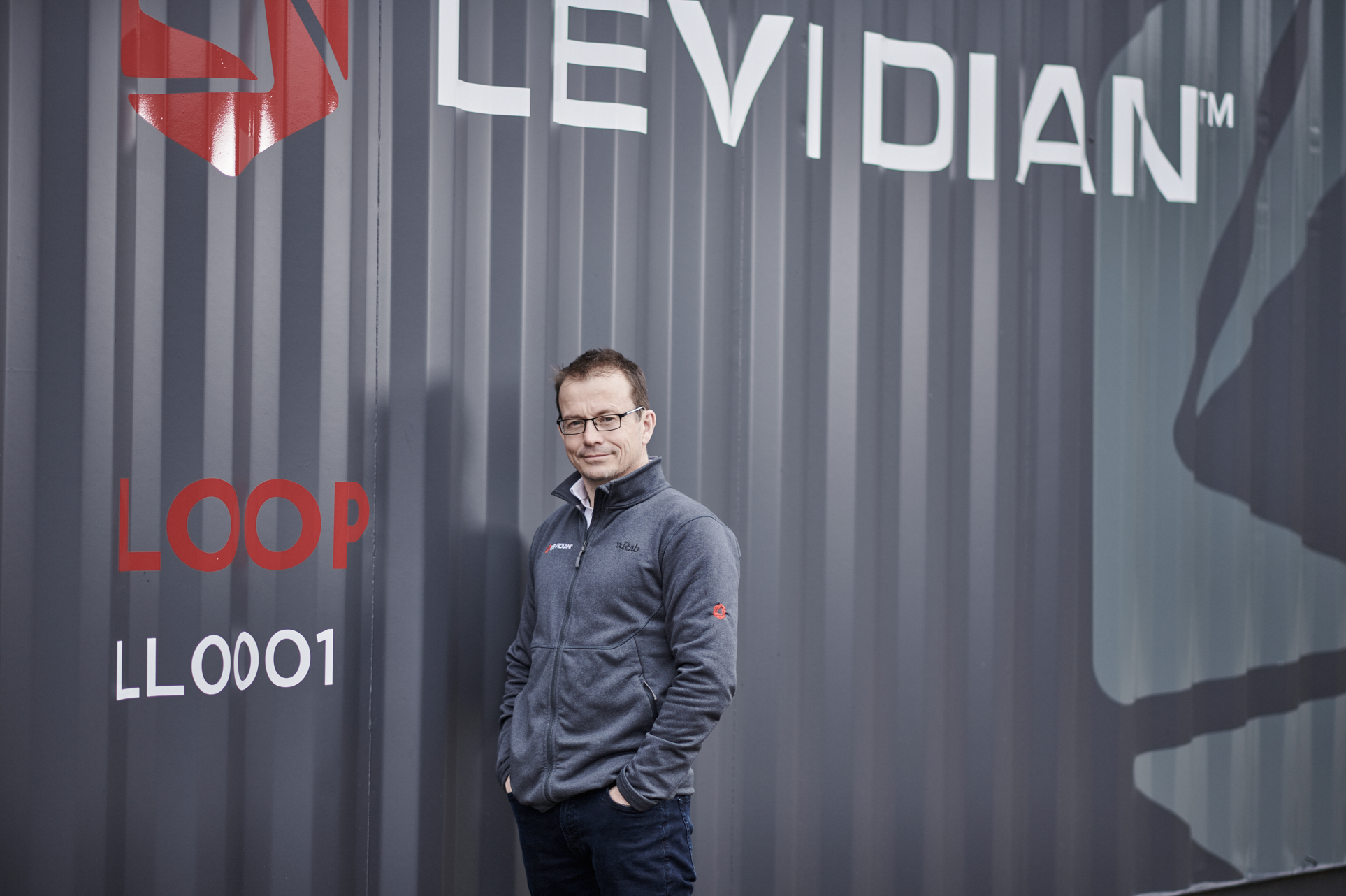
At Levidian, we've been working through those challenges as we scale our LOOP technology, which converts methane into graphene and hydrogen, and move from individual equipment builds towards an international operating fleet.
What we've learned is that Supply Chain can't simply be the function that purchases components once engineering has finished designing something. It needs to be part of the development process itself.
The supply chain can improve the technology, not just supply it
One of the most useful lessons we've learned is that some of the biggest improvements come from challenging how a component is made and supplied, rather than simply negotiating a better price.
Our filtration system is a good example.
Two years ago, we were using a relatively expensive filtration solution, with long lead times, inconsistent quality and a supply of materials that wasn't always reliable.
Rather than accept those limitations, we worked with our supply chain partners to explore alternative approaches. That involved discussions about manufacturing methods, a series of trials and feedback between our engineering and supply chain teams.
We also moved elements of the machining process into the supply chain, reducing the amount of internal handling required.
The result was a solution that reduced the component cost by a factor of ten while also improving performance and reducing supply risk.
That's a significant improvement, but it didn't come from a conventional purchasing exercise. It came from treating suppliers as part of the problem-solving process.
For a technology business, that distinction matters. Your suppliers often have specialist manufacturing knowledge that you don't have internally. Bringing that expertise into the development process can improve the product itself, as well as how efficiently it can be manufactured.
Building equipment and keeping it running are two different challenges
As Levidian's LOOP technology moves into more operating environments, the requirements placed on Supply Chain are changing.
Supporting the build of a machine is largely about ensuring that components arrive when needed, managing lead times and dealing with changes to the design or build programme.
Once that machine is operating at a customer site, the priorities change.
Availability, maintenance support and continuity of operation become critical. A component that was relatively straightforward to manage during assembly can become a much bigger issue if it fails at a remote site and the replacement has to be shipped internationally.
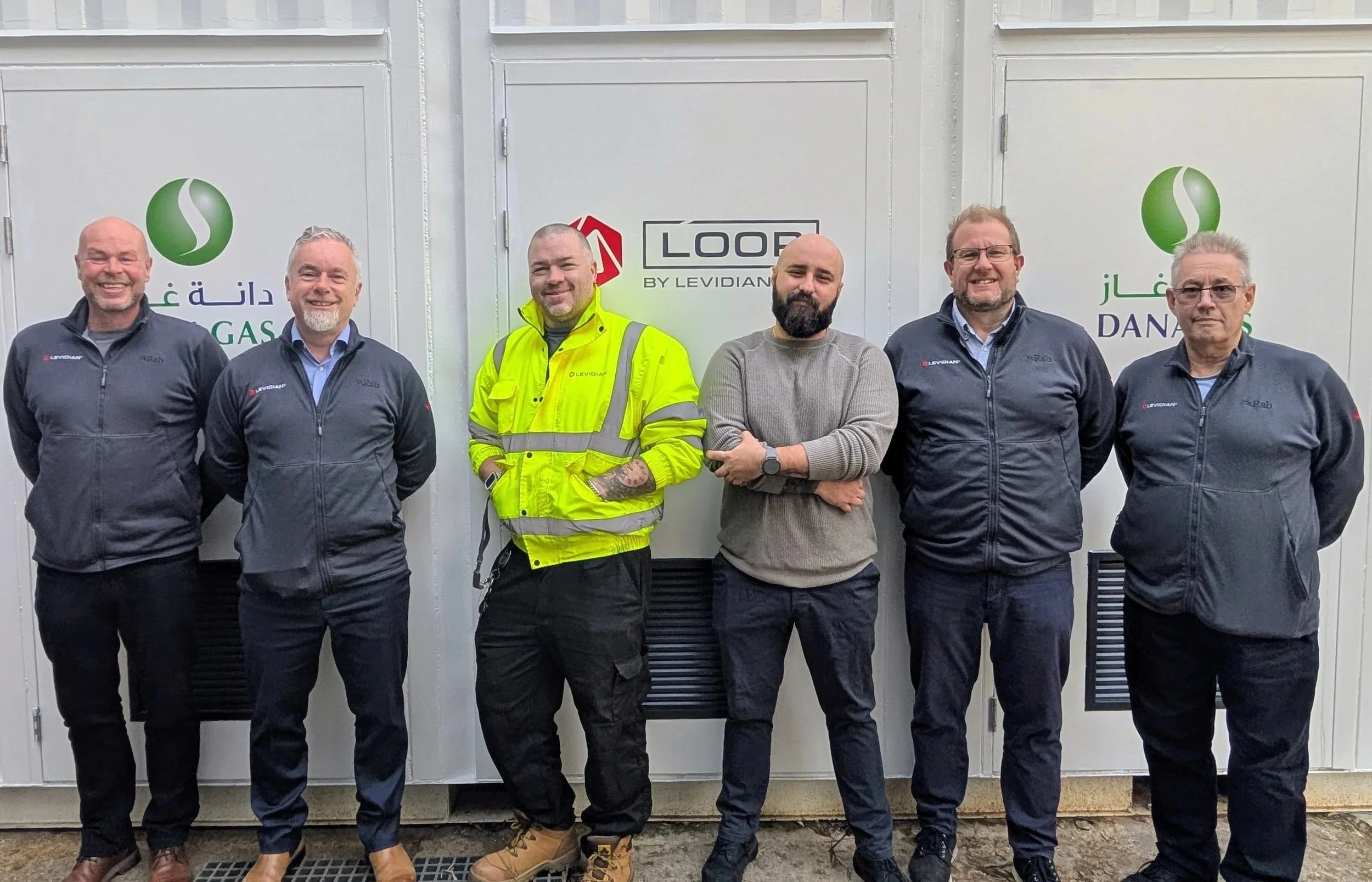
This is particularly relevant to our deployments in the UAE, where our LOOP20 is already installed, and we're progressing the deployment of further LOOP units.
The challenge isn't simply getting equipment from Cambridge to Sharjah. It's ensuring we have the supply chain capability to support that equipment throughout its operating life.
That means understanding which components are critical, how frequently they need servicing or replacing, how long replacements take to obtain and what support is available locally.
For established equipment, much of that information comes from years of operating history. With a developing technology, you're building that knowledge as you go.
Initially, you have to make decisions based on engineering judgement, supplier advice and the information available. As more operating data comes through, you can refine stock levels, maintenance intervals and replenishment strategies.
It's a continuous learning process, and one that becomes increasingly important as the number of operating units grows.
Resilience doesn't necessarily mean holding more stock
One of the difficult balances in Supply Chain is managing the risk of component shortages without tying up unnecessary working capital in inventory.
The obvious answer to long lead times might be to hold more spare parts. But that isn't always the most effective or economical solution, particularly when designs are still evolving.
We've been developing supplier-managed inventory arrangements that offer a different approach.
For certain long-lead components, suppliers now hold stock locally on our behalf, with items available for next-day delivery when required.
That reduces our inventory holding requirements while giving us greater confidence in availability.
It also demonstrates why good supplier relationships are so important. These arrangements depend on suppliers understanding our requirements, recognising the longer-term opportunity and being prepared to work with us on something more flexible than a conventional purchase order.
As our operating fleet develops, the quality of the data we collect will become just as important. Actual component usage, failure rates, lead times and maintenance requirements will help us make better decisions about what to stock, where to stock it and when to replenish it.
The objective isn't to eliminate every possible supply chain risk - that's neither realistic nor affordable. It's to understand the consequences of failure and make informed decisions about where resilience matters most.
Localisation is about more than finding a local supplier
Our growing presence in the UAE brings another dimension to the challenge.
International supply chains can be vulnerable to disruption, and relying entirely on components and support shipped from the UK isn't necessarily the right long-term model for an expanding regional operation.
Developing local sourcing and technical capability is therefore an important part of our plans.
But localisation isn't simply a case of replacing a UK supplier with a UAE supplier.
Components and systems have to meet the same technical, quality and commercial requirements, regardless of where they're sourced. In some cases, identifying a local alternative may require changes to a component or system, followed by testing and qualification before it can be adopted.
There are also differences in how suppliers operate, how relationships develop and what capabilities are available in a particular market.
We've found that local knowledge matters, and that building confidence with new suppliers takes time. We're not simply looking for companies that can provide a component at the lowest price. We need partners who understand what we're trying to achieve and are prepared to develop their capabilities alongside us.
Some specialist components will continue to come through our established international supply chain. Others may be sourced or supported regionally as suitable capabilities develop.
The longer-term opportunity is to build a regional supply chain that could support not only the operation and maintenance of LOOP equipment, but potentially local assembly and manufacture.
That won't happen overnight, and it requires a deliberate approach to supplier development, qualification and relationship building.
But it's an important part of moving from deploying individual machines into a market to establishing a sustainable industrial presence.
Designing the next generation with the supply chain in mind
Perhaps the most important lesson is that the experience we're gaining today needs to influence how we design tomorrow's equipment.
When developing a new technology, the initial engineering focus is understandably on proving that it works. As the technology matures, other considerations become increasingly important.
How easy is a component to manufacture consistently? How many different parts do we really need? Can we standardise systems across different equipment sizes? How frequently does something need servicing, and could that maintenance requirement be reduced or designed out altogether?
A component's purchase price is only part of its true cost. Maintenance intervals, cleaning requirements, replacement costs, availability and the consequences of failure all contribute to the total cost of ownership.
These are areas where Supply Chain can make a meaningful contribution to engineering decisions.
At Levidian, the experience gained from our first generation of LOOP equipment is helping inform the development of the next. That includes opportunities for standardisation, value engineering and working with specialist suppliers to improve critical systems.
It also means being prepared to challenge existing designs. Something that made sense when building the first machine may not be the best solution when you're planning to build and operate many more.
The earlier those conversations happen, the greater the opportunity to influence both the design and the economics of the technology.
From individual builds to industrial capability
For me, one of the defining characteristics of scaling industrial technology is that you rarely have all the answers at the outset.
You develop the technology, learn from manufacturing it, learn more from operating it and use that experience to improve the next generation.
The supply chain has to evolve through that same process.
Our experience at Levidian has reinforced the importance of involving suppliers early, using their expertise to solve technical and manufacturing problems, building inventory strategies around operational risk and developing local capability as we expand internationally.
None of these activities is particularly visible compared with a new technology milestone or a successful deployment. But they're fundamental to turning promising engineering into equipment that can be manufactured, delivered, maintained and operated reliably at scale.
And ultimately, that's what industrialisation is about, not simply proving that you can build something, but developing the capability to build it repeatedly, support it wherever it operates and keep improving it along the way.