Growing Up with Graphene: From lecture hall to laboratory, lessons from my internship at Levidian.
By Neve Woodward
Graphene has just celebrated its 22nd birthday, as I approach my own. My materials science career is beginning, and I am transitioning from university to industry. Graphene's journey from laboratory breakthrough to an advanced material with real commercial applications has taken almost exactly as long as it has taken me to reach an age where I could begin a career in advanced materials myself. This parallel serves as a reminder of how long innovation can take, with graphene having spent the past two decades transitioning from a scientific discovery to a commercial reality.
Theory in isolation vs. theory in context
Studying Chemical and Energy Engineering at the University of Leeds gave me a strong technical foundation. Most learning happened in lecture theatres, where complex ideas were presented through diagrams, equations and carefully structured examples. At Levidian, I've discovered that applying that knowledge is a very different challenge. Real-world problems rarely fit neatly into textbook chapters, and there isn't always a clear route to the answer.
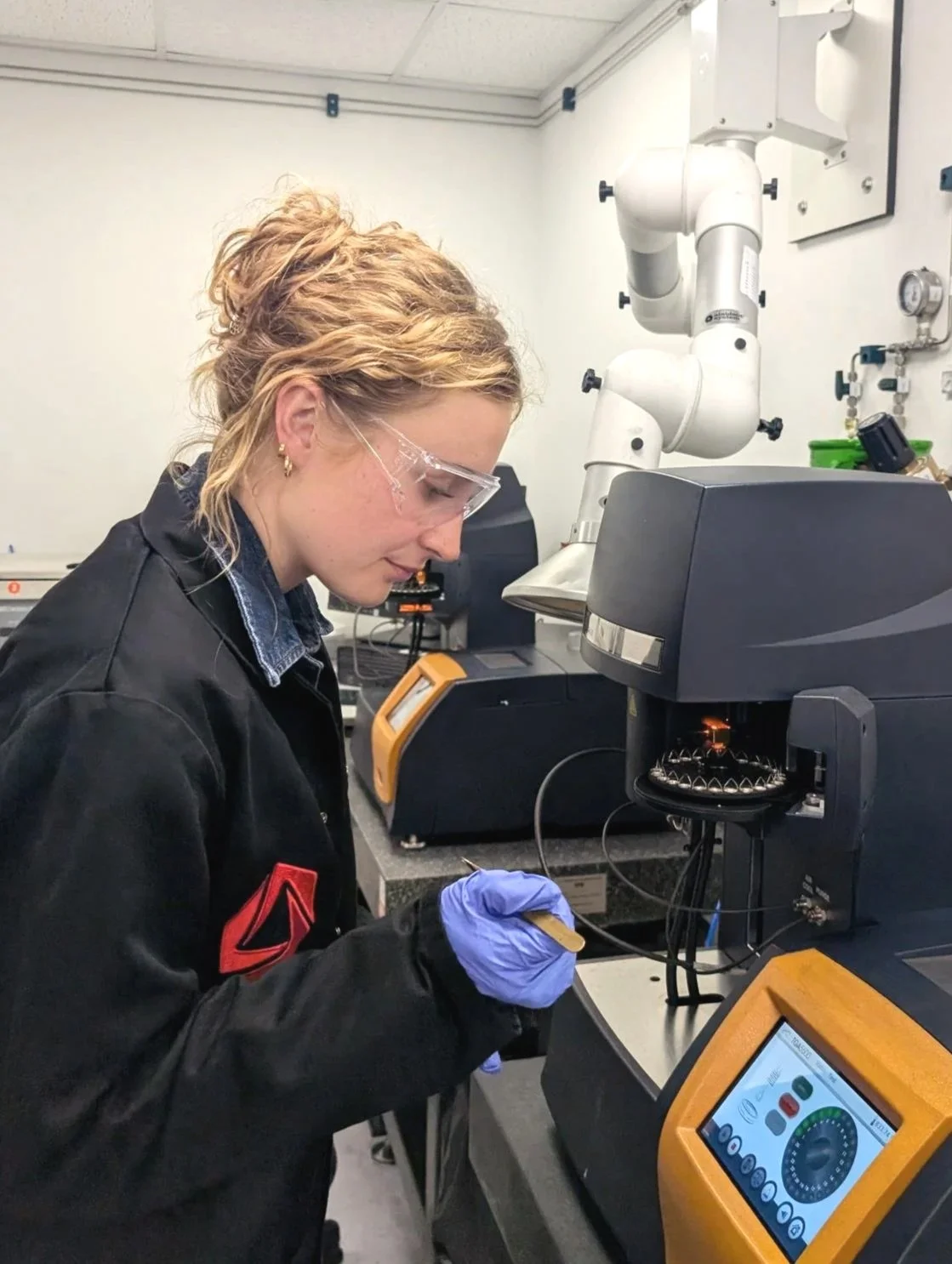
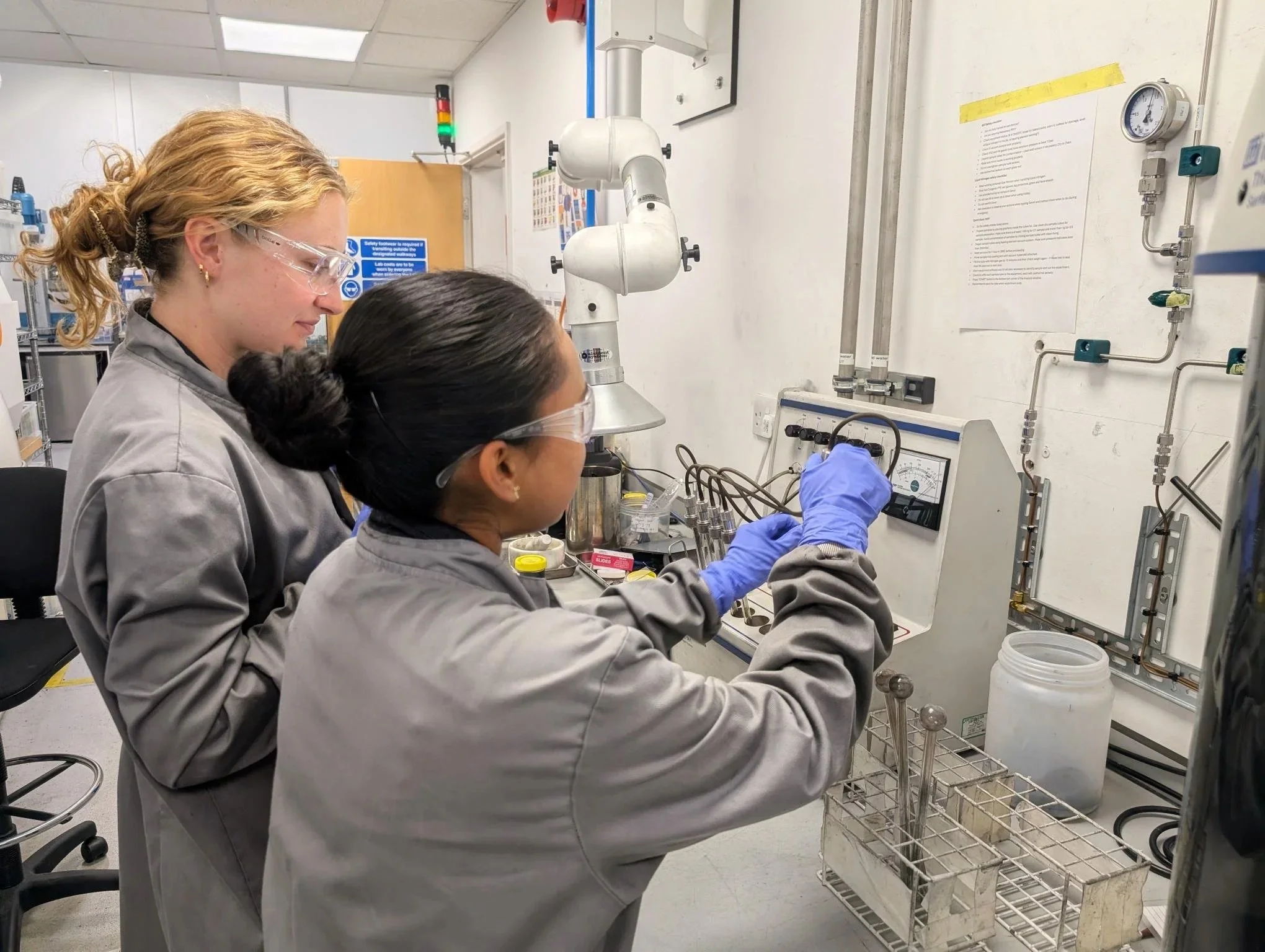
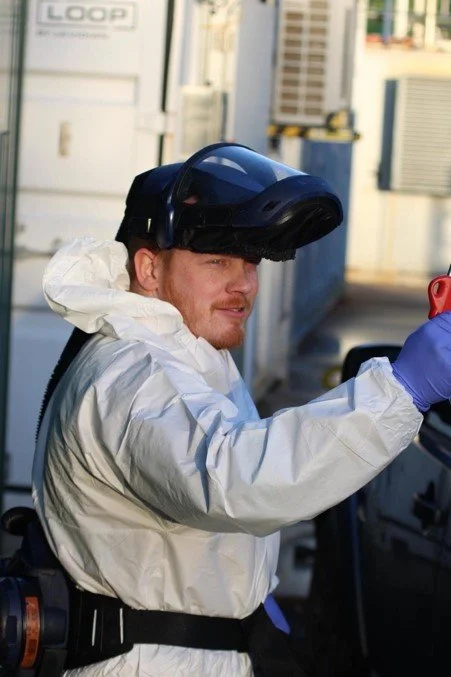
My internship began with a thorough introduction to laboratory safety, including Standard Operating Procedures (SOPs), Control of Substances Hazardous to Health (COSHH) requirements and Hazard and Operability Studies (HAZOPs) before I started practical work. From there, I learned to operate three key analytical techniques: Raman spectroscopy, thermal gravimetric analysis (TGA) and Brunauer-Emmett-Teller (BET) surface area analysis. I also became involved in dispersion work, concentration testing and sample preparation. I learned how to prepare samples, calibrate instruments, and interpret results, experiences you don't get in a classroom.
One of the biggest lessons I learned was that no single test tells the whole story. Raman, TGA and BET each measure different characteristics of graphene, and only by considering all three together can you build a complete picture of material quality. At university, these techniques were often taught individually. Working in the laboratory showed me how they complement one another in practice.
By my second week, I was helping to run full days of sample testing while also carrying out commercial research into graphene dispersion markets. That meant investigating a niche market where very little public pricing information exists, speaking directly with suppliers and building a picture of emerging market trends. It gave me an appreciation that commercialising an advanced material involves much more than the science. Understanding markets and customers is just as important.
By week two, I was helping run full days of sample testing across all three machines while also conducting additional commercial research on graphene dispersion markets. I investigated pricing for a niche industrial materials segment with limited public data by contacting suppliers directly and consolidating findings into market trends. This highlighted the challenge new materials face in establishing themselves commercially, due to the absence of public pricing or competitive information. This required deliberate research, providing insights into the commercial aspects beyond lab work and helping me develop market research and competitor analysis skills.
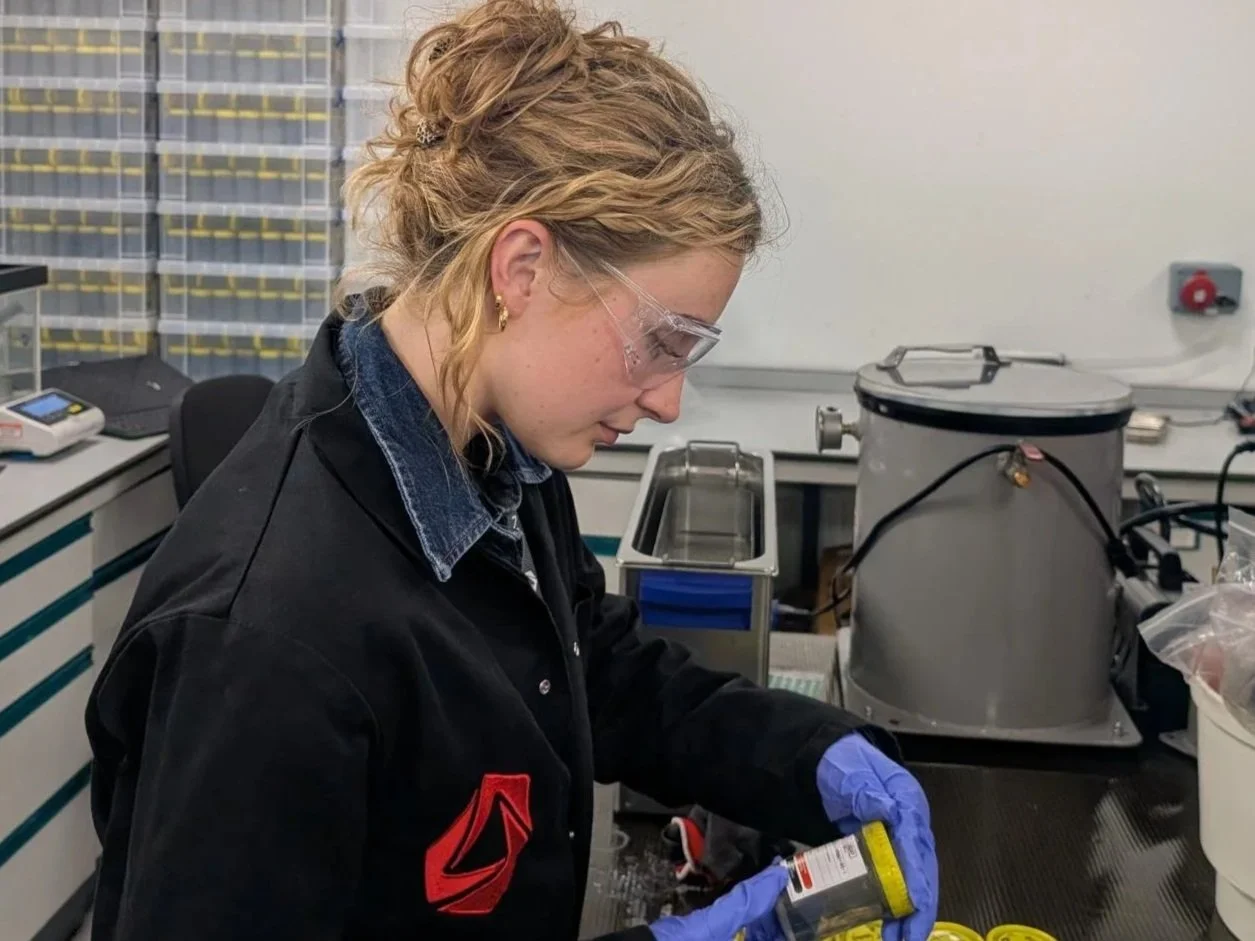
Alongside my desk-based work, I continued supporting quality control, improved my confidence using the Raman system and helped process graphene dispersions using laboratory equipment. Working with real formulations quickly showed me how sensitive these systems can be. Small changes in graphene concentration or processing conditions can make the difference between a stable, homogeneous dispersion and one that fails. Developing robust formulations is an iterative process of testing, learning, refining and testing again until consistent performance is achieved.
Not everything worked perfectly the first time. Occasionally, results had to be repeated because something wasn't quite right. Rather than being setbacks, those moments became some of the most valuable learning experiences. Every repeat improved my understanding, whether it was preparing samples more consistently, focusing the Raman laser more effectively or recognising why a particular result looked different from expectations.
None of that learning happened in isolation. Some of the most valuable lessons came from the people around me. Whether someone demonstrated a quicker technique, helped troubleshoot an unexpected result or simply encouraged me to keep going when something didn't work the first time, I realised how collaborative scientific research really is.
Looking back, this internship has developed far more than my technical skills. It has taught me to ask questions when I don't understand something, to make connections between different sets of data and to have the confidence to present ideas and contribute to discussions. Those skills are every bit as important as the scientific knowledge itself.
Looking ahead
Working at Levidian has also changed the way I think about graphene. Before joining, I saw it as another fascinating advanced material. Now I've seen first-hand how many industries are exploring its potential, from coatings and energy to manufacturing, and how much work goes into turning scientific innovation into commercial reality.
More than anything, this internship has confirmed that I want to build my career in advanced materials. In just a few weeks, I've learned more than I imagined possible, not simply because of the pace of work, but because every day combined science, engineering and commercial thinking. i have been pushed to cultivate essential skills, such as asking questions when my understanding was lacking, making links between data, and possessing the confidence to present ideas or research findings to act on them. Those turned out to be equally important as the technical knowledge acquired in the lab. The workplace is an environment characterised by a diversity of ages, experiences, and personalities; collaborating within such an environment, with the assurance that I could contribute as much as I could learn, was a skill I hope to carry into the future. It's an experience no lecture hall could fully recreate.
As I take the first steps in my career, graphene is taking the next steps in its own journey towards wider commercial adoption. In different ways, we're both at the beginning of something exciting.